The AI Witch Report
What do large language models (LLM’s) and AI image generators tell us about our current conceptions of witches? As omnipresent forces in our digital world, conversational and visual AI tools carry a new and powerful voice. They not only tap into and reflect our collective assumptions through constant data consumption, but also expose our own biases. Thus, I decided to have a chat with AI about witches to uncover how they are perceived in contemporary society.
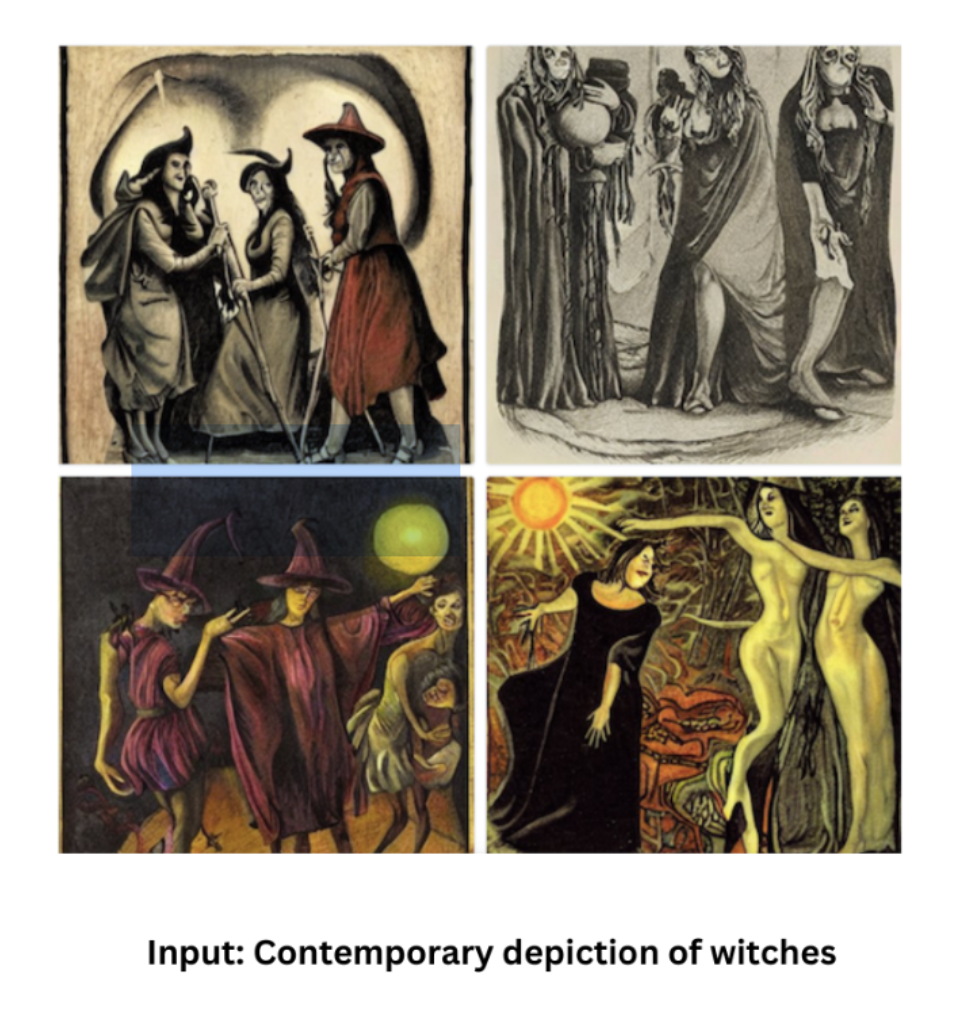
This solo creative project compared ChatGPT and Bing chatbot responses with AI-generated visuals from MidJourney and Stable Diffusion, using thematic analysis to identify patterns across text and images.
Situating witches as figures historically associated with female independence, sexuality, and nonconformity, the project explores how AI mediates feminist reclamations of the witch alongside lingering stereotypes rooted in patriarchal and moral anxieties. By placing AI in dialogue with the figure of the witch, the analysis positions witchcraft as a conceptual counterpoint to disembodied, natureless technological imaginaries.
What’s Innovative
This project reveals how different system architectures shape ideological outputs
Positions the witch as a feminist and ecological counter-figure to AI’s disembodied logic
Explores AI not only as a technological object, but as a participant in cultural meaning-making
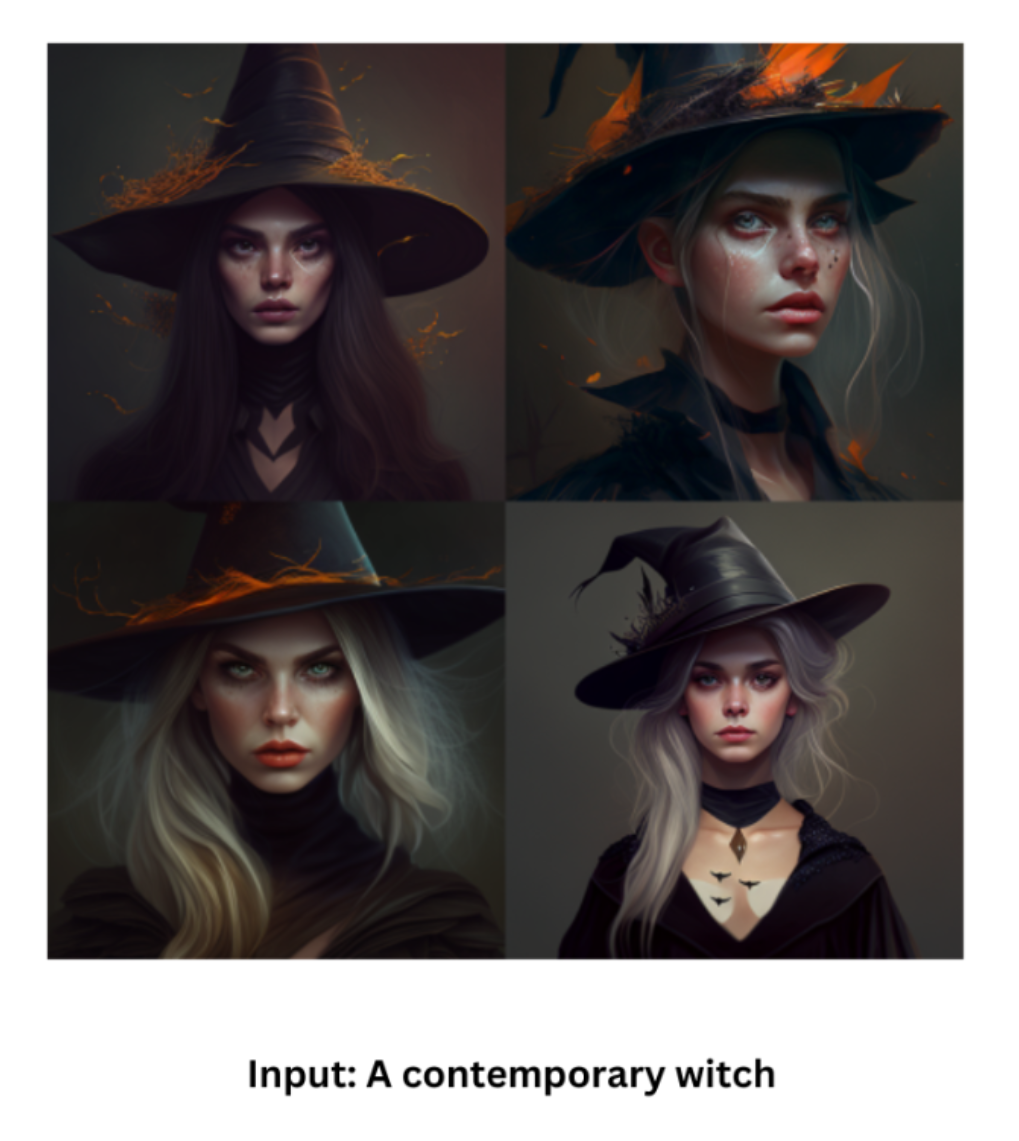
Findings
AI image generators reproduce entrenched stereotype. MidJourney and Stable Diffusion overwhelmingly depict witches as white women, which reflects medieval European imaginaries and reinforces racialized, gendered, and patriarchal tropes embedded in training data
Text-based chatbots are more reflexive but still shaped by bias. ChatGPT and Bing provide more historically contextualized accounts of witchcraft, acknowledging gendered persecution and feminist reclamation, while still operating within inherited cultural frameworks
Across systems, witches are associated with sexual autonomy, independence, and nonconformity, which have been historically framed as threats, but increasingly reclaimed as feminist symbols. Witchcraft, therefore, remains closely tied to female sexuality and power
Nature is also central to contemporary AI narratives of witchcraft. Both chatbots link witches to ecological consciousness, sustainability, and ecofeminist values, positioning them as counterpoints to disembodied technological futures
The witch is the antithesis of AI. While AI points toward abstraction and virtuality, the witch symbolizes embodiment and ecological grounding, which raises questions about how humans, technology and nature might coexist in harmony